There is a moment after a big loss that feels unusually quiet. On the outside, almost everything remains the same. The screen still glows, the game continues, the surroundings do not change. But inside the player’s mind, something shifts in a deep and noticeable way.
For a few seconds, sometimes longer, the player simply sits still. There is no immediate reaction, no sudden movement. Just a pause. It is not empty silence, but a heavy kind of stillness where the mind is trying to understand what just happened.
This moment is not only about money. It is about expectation breaking in an instant. It is about the difference between what the player hoped would happen and what actually happened. That gap creates a strong internal reaction, even if it is not visible on the surface.
If you observe closely, this quiet moment is filled with small waves of thought. They do not come all at once. They arrive slowly, one after another, as the mind begins to process the experience.
The First Reaction Is Shock and Mental Pause
Right after a big loss, the brain does something very natural. It pauses.
This pause is not weakness. It is the mind trying to catch up with reality. The outcome may have been possible, but it still feels sudden. The brain was prepared for a better result, or at least a different one, and now it has to adjust quickly.
This creates a state that feels like shock.
It is not loud or dramatic. It is quiet and internal. The player may stare at the screen, not moving, not reacting outwardly. Inside, thoughts are incomplete and scattered. Instead of full sentences, the mind produces short fragments like “how did that happen” or simply a silent “no.”
Psychologists in Cognitive Psychology explain that when something unexpected happens, the brain needs a short processing period before it can respond properly. This is why people often freeze momentarily after surprising events.
Time may feel slightly slower in this phase. The player is present, but not fully active. It is similar to hearing unexpected news and needing a few seconds before reacting.
This silence is important because it is the starting point of everything that follows.
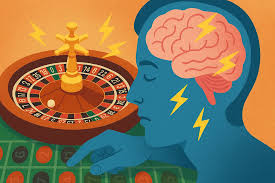
The brain briefly pauses when processing unexpected outcomes before forming clear thoughts.
The Mind Begins Searching for Meaning
After the initial pause, thoughts begin to form more clearly. The brain does not like confusion, and it does not like unanswered questions. It immediately starts searching for meaning.
The player may begin asking:
- Why did this happen
- Did I make a mistake
- Was there something I missed
This is a natural reaction. The brain tries to turn randomness into something understandable. Even in games that rely on chance, the mind still looks for patterns or reasons.
This behavior is often linked to concepts studied in Behavioral Psychology, where people attempt to explain outcomes even when no clear explanation exists.
The player might replay recent moments in their mind. They may go over previous decisions, trying to find a point where things could have been different.
This is where regret quietly enters.
It does not always feel intense, but it lingers in the background. Thoughts like “I should have stopped earlier” or “I should not have increased the bet” begin to appear.
At the same time, another feeling slowly rises alongside regret.
Hope.
Even after a large loss, the mind rarely closes the door completely. It leaves a small opening. A thought like “maybe I can recover” or “maybe the next round will go differently” appears gently.
This creates a tension inside the player.
Part of the mind is looking backward, analyzing what went wrong. Another part is looking forward, imagining what could still happen.
This mix of regret and hope makes the moment emotionally complex.
Real Player Experiences
Many players describe this stage in a very similar way.
One player shared:
“After a big loss, I just sit there for a minute. Then my mind starts replaying everything I just did.”
Another explained the emotional mix:
“You feel bad about what happened, but at the same time you think maybe you can fix it if you keep going.”
These reflections show how naturally the mind moves between understanding the past and imagining the future.
Emotions Begin to Take Control
As the mind moves beyond analysis, emotions begin to grow stronger. The quiet shock fades, and more active feelings take its place.
Frustration is often one of the first emotions to appear. Even when a player understands that the game involves chance, the loss can still feel unfair on a personal level. This feeling does not come from logic. It comes from emotional reaction.
According to observations often discussed by the American Psychological Association, losses tend to trigger stronger emotional responses than gains. This is related to a concept called loss aversion, where losing feels more intense than winning feels rewarding.
This emotional weight changes how the player thinks.
The desire to act becomes stronger.
Some players feel an immediate urge to continue. They want to change the outcome. They want to recover what was lost as quickly as possible. This can lead to faster decisions, often without full clarity.
Other players experience the opposite reaction.
They may feel drained. The loss takes energy away from them. Instead of acting, they hesitate. They feel unsure about what to do next.
Both reactions are natural, but they come from emotion rather than calm thinking.
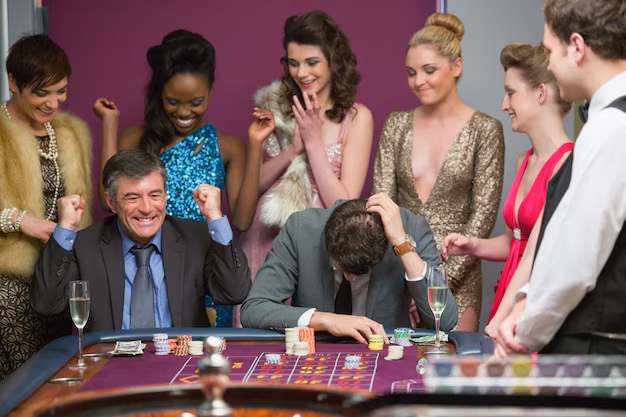
Losses often create stronger emotional swings than wins, affecting decision-making behavior.
Decision Making Becomes Less Clear
At this stage, thinking and feeling are no longer separate. They blend together.
A calm mind usually makes steady and balanced decisions. But after a big loss, the mind carries emotional weight. This changes the way choices are made.
Some players may act quickly, trying to recover their losses. Others may delay, unsure of what step to take. In both cases, the natural balance is disrupted.
This is similar to trying to walk while carrying something heavy. Your movement changes. You may rush to get it over with, or you may slow down because of the weight.
In the same way, the emotional weight of the loss changes how the player moves forward.
There is also a deeper psychological effect.
A large loss can briefly affect how a player sees themselves. They may begin to question their decisions or their ability to play well. Confidence can drop, even if only for a short time.
On the other hand, some players feel a strong urge to prove something. They may want to show themselves that they can recover or make better decisions next time.
Both reactions come from the same place.
The need to restore balance.
The Hidden Mental Load of a Big Loss
What makes this moment so important is that most of it happens internally. From the outside, it may look like nothing is happening. The player is just sitting there, looking at the screen.
But inside, the mind is very active.
It is processing shock, searching for meaning, handling emotion, and preparing for the next decision, all at the same time.
This is why big losses feel different from small ones. They create a deeper mental and emotional response that takes time to settle.
Final Thought
A big loss is not just a financial moment. It is a psychological one.
It begins with silence, moves into reflection, grows into emotion, and then shapes the next decision. Each stage flows naturally into the next, forming a complete mental process.
The next time you notice a player sitting quietly after a loss, or if you experience that moment yourself, it can be helpful to pause and observe.
Notice the stillness. Notice how thoughts slowly form. Notice how emotions rise and influence decisions.
That moment is not empty.
It is full of quiet activity.
Just like someone who takes a moment to sit and think after something unexpected, the mind also needs space to process what has happened.
And in that space, you can see something very human, not just the experience of losing, but the way the mind works to understand, respond, and move forward.